1.1 Industry Challenges & Demands
✅ Grid Pressure: Fluctuations from renewable energy integration require real-time charge/discharge regulation.
✅ Safety Risks: Thermal runaway, communication failures threaten operational stability.
✅ High O&M Costs: Manual inspections delay fault responses, increasing financial losses.
1.2 Core Value of EMS Systems
✅ Centralized Control: Integrates BMS, PCS, and PMS data for unified monitoring.
✅ Millisecond Response: Locates faults in ≤5ms, isolates faulty branches in ≤40ms.
✅ Cost Savings: Reduces grid expenses by 30%+ via peak-valley pricing strategies.
2. Technical Architecture of EMS Communication Solution
2.1 Dual-Ring Redundant Design
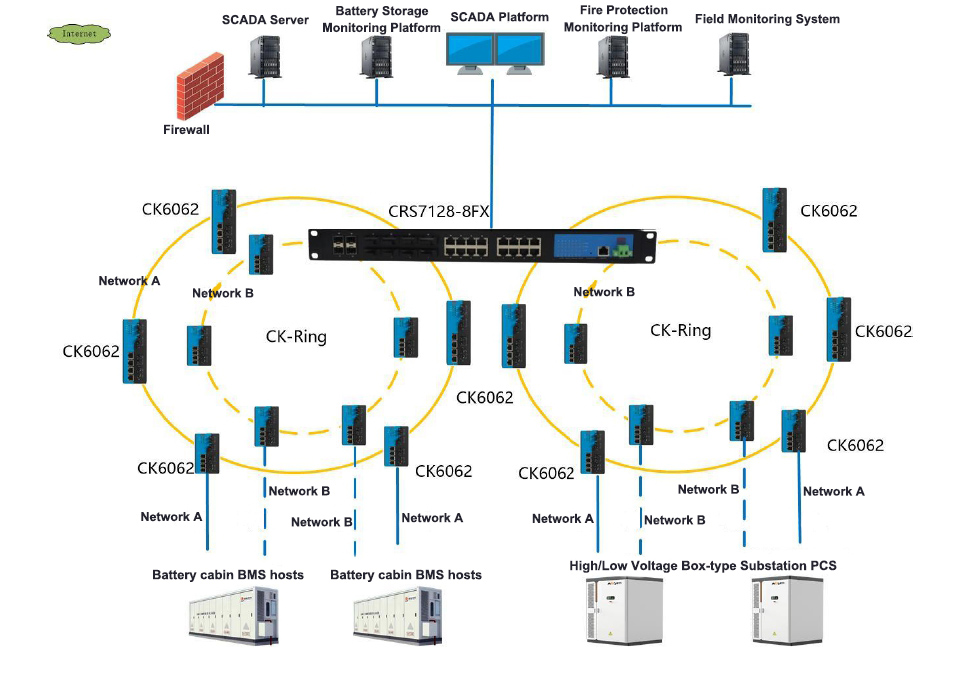
2.2 Key Equipment Selection
|
Device |
Core Features |
Applications |
|---|---|---|
|
CK6062 Series |
-40°C to 85°C operation, IP40 rating |
Battery cabins, outdoor PCS units |
|
CRS7128 Series |
8×Gigabit ports, RSTP/CK-ring multi-mode networking |
Data center core aggregation |
3. Competitive Advantages
Advantage 1: Military-Grade Cybersecurity
HTTPS/SSH encryption, ACLs, device fingerprint authentication.
Advantage 2: 80% Faster O&M Efficiency
One-click batch configuration (100+ devices).
Auto-topology discovery eliminates manual mapping errors.
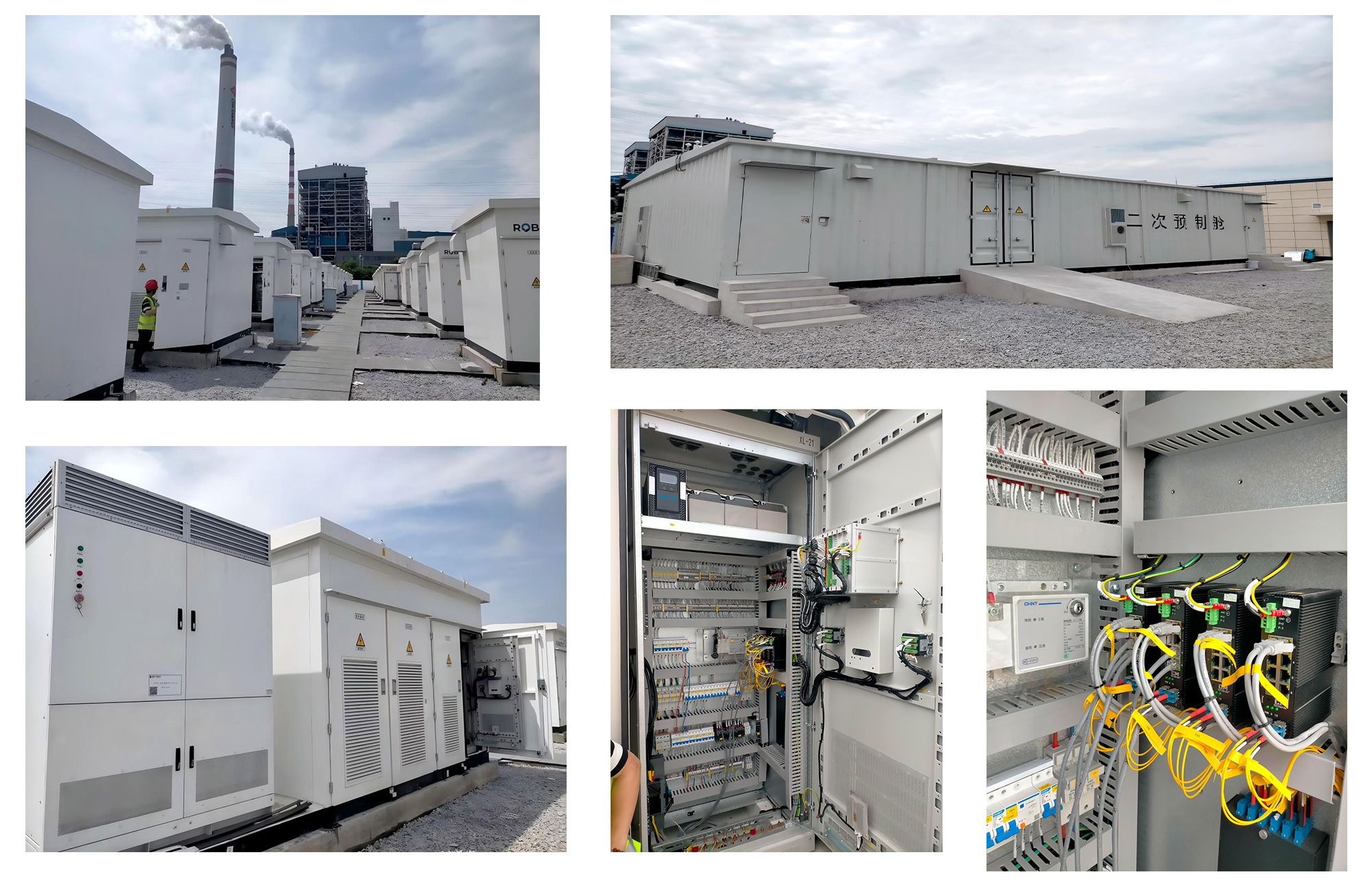
4. Case Study: 200MW Energy Storage Plant Performance
| Metric | Pre-Deployment | Post-Deployment | Improvement |
|---|---|---|---|
| Fault Response | 2 minutes | 8 seconds | 1500% faster |
| O&M Labor Cost | 15 staff/site | 3 staff/site | 80% reduction |
| Grid Peak-Shaving ROI | $1.2M/year | $2.9M/year | 142% increase |
5. FAQs
Q: How to choose between RSTP and CK-ring?
A: RSTP: Ideal for small/medium plants (cost-effective, ≤50ms self-healing).
CK-ring: Optimal for large plants (≤20ms self-healing, multi-ring support).
Q: Third-party BMS/PCS compatibility?
A: Modbus TCP/IEC 61850 protocols; verified with CATL, BYD, and other OEMs.


