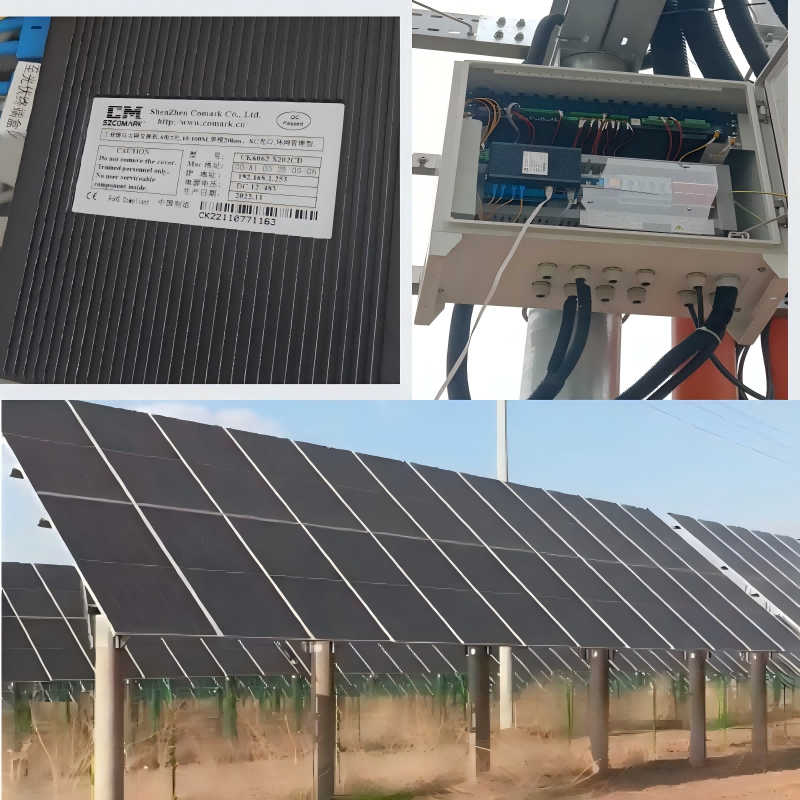
A decentralized clean energy solution combining photovoltaic (PV) generation and energy storage systems (ESS) at user sites (e.g., factory rooftops).
Core Principle:
Generate-Consume-Localize-Store
Distributed PV: On-site solar arrays minimize transmission loss.
ESS Integration: Lithium/flow batteries store excess energy for night/cloudy use.
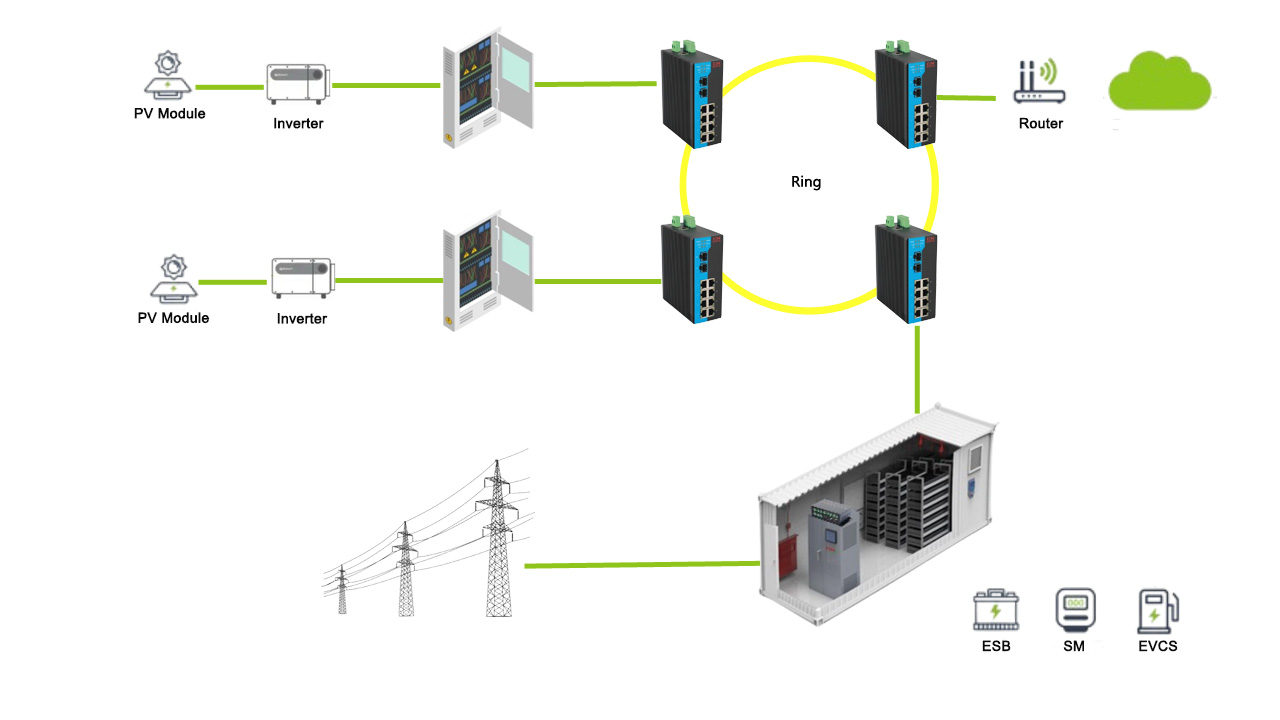
Operation: PV → DC power → Inverter → AC power → ESS stores surplus → EMS optimizes dispatch.
1️⃣ Communication Failures:
PV-ESS miscoordination: Packet loss delays charging during solar surges.
Peak-valley arbitrage failure: Network latency prevents discharge at high tariffs.
2️⃣ Protocol Barriers:
PV (IEC 61850) ≠ production line (Modbus TCP) → no real-time kWh/t calculation.
3️⃣ Security Threats:
Non-isolated networks allow hackers to manipulate charge/discharge curves → overcharging risks explosion.
✅ Stable Data Transport:
Real-time PV/ESS/device monitoring.
✅ Remote O&M Efficiency:
Centralized status tracking cuts costs.
✅ Key Requirements:
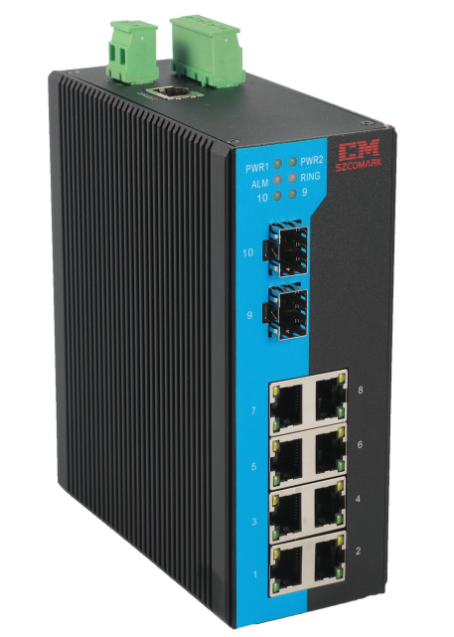
Redundant ring topology (<50ms recovery).
EMI-proof metal housing, 12-48V DC wide voltage input.
Challenge:
Power shortages during extreme weather.
Rising electricity costs (high-energy industry).
No remote fault analysis.
Results:
✅ 24/7 Production: PV charges ESS → powers loads during outages.
✅ 14.4312M kWh Annual Generation: >75% self-consumption, slashing grid costs.
✅ Smart Monitoring: Real-time data collection, visualization, and alarms.